

Bicep Curl Cable Handles: Complete Guide
When it comes to building powerful, sculpted biceps, the right equipment can make all the difference between mediocre gains and explosive growth. Bicep curl cable handles have become essential tools for serious lifters who demand precision, versatility, and maximum muscle engagement from every rep. Unlike fixed-position machines or basic barbells, cable attachments provide constant tension throughout the entire range of motion, forcing your biceps to work harder at every angle.
Whether you're a competitive bodybuilder chasing symmetry, an athlete building functional strength, or a dedicated gym-goer in the war for more muscle, understanding how to select and utilize the right cable handles for bicep curls will transform your arm training. This comprehensive guide explores everything you need to know about bicep curl cable handles, from different handle types to proper technique and programming strategies.
Why Cable Handles Dominate Bicep Training
Cable machines with quality handles offer distinct advantages over traditional free weights for bicep development. The constant tension provided by cables keeps your muscles under load throughout both the concentric and eccentric phases of each rep, eliminating the "rest points" that occur with dumbbells and barbells at the top and bottom of movements.

According to ACE Fitness exercise research, cable exercises allow for greater exercise variation and angle manipulation, targeting different portions of the bicep muscle group more effectively. This versatility enables you to hit the long head, short head, and brachialis from multiple angles in a single training session.
Cable handles also reduce stress on your wrists and elbows by allowing natural hand positioning throughout the movement. This biomechanical advantage means you can train harder, more frequently, and with less risk of overuse injuries that sideline progress. For lifters who settle for no less than excess, this translates to more training volume and faster gains.
Types of Cable Handles for Bicep Curls
Not all cable attachments are created equal. Understanding the distinct benefits of each handle type ensures you're maximizing every workout.
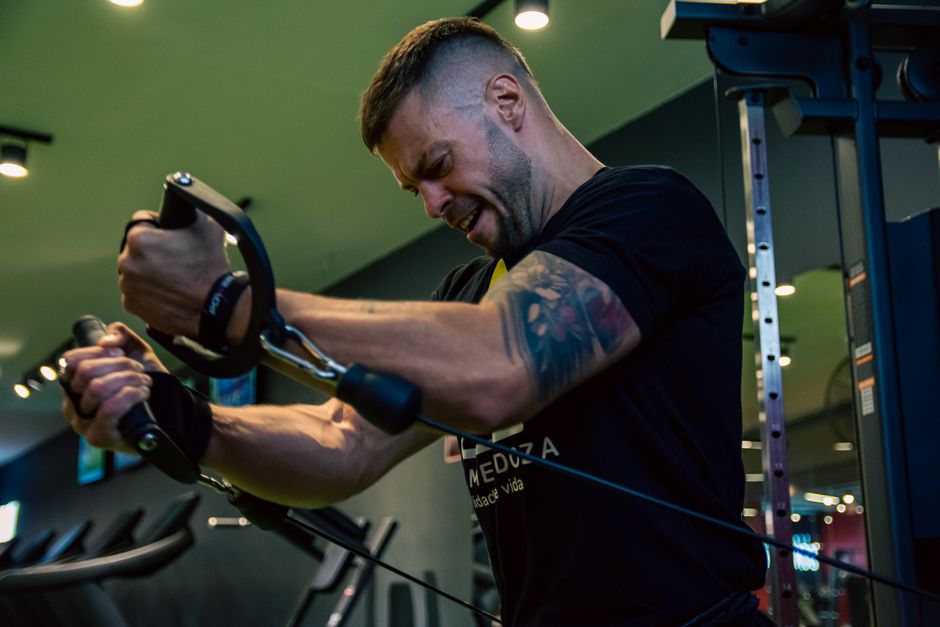
Straight Bar Attachments: The classic straight bar handle provides a fixed grip that's ideal for heavy loading and building overall bicep mass. It forces both arms to work in unison, preventing strength imbalances while allowing you to move maximum weight. The rigid positioning emphasizes the long head of the biceps when using an underhand grip.
EZ Curl Bar Handles: The angled grip of an EZ curl bar cable attachment reduces wrist strain while shifting emphasis slightly more toward the brachialis and brachioradialis muscles. This semi-pronated position is often more comfortable for high-volume training and reduces elbow stress, making it perfect for drop sets and extended rep ranges.
Rope Attachments: Rope handles allow your hands to move independently and rotate naturally throughout the curl motion. This freedom of movement enables peak contraction at the top of the movement by allowing your hands to supinate fully. Rope curls particularly target the short head of the biceps and create impressive peaks when performed correctly.
Single Handle D-Grips: Unilateral training with individual D-grip handles identifies and corrects strength imbalances between arms. Single-arm cable curls allow complete freedom of motion, enhanced mind-muscle connection, and the ability to focus intensely on one bicep at a time. They're essential for competitive bodybuilders chasing symmetry.
Specialized Ergonomic Handles: Purpose-designed handles with unique grip angles, rotating mechanisms, or contoured shapes can provide advantages for specific training goals. These high-performance cable gym accessories are engineered by lifters who understand that details matter when you're extracting maximum gain from workout pain.
Proper Cable Curl Technique and Form
Even the best equipment delivers poor results without proper execution. Mastering cable curl technique ensures you're building muscle, not injuries.

Begin by setting the pulley to its lowest position for standard cable curls. Stand facing the machine with feet shoulder-width apart, core engaged, and shoulders pulled back. Grip your chosen handle with an underhand grip, fully extending your arms while maintaining a slight bend in your elbows to protect the joint.
Initiate the curl by flexing at the elbow joint only—your upper arms should remain stationary and pinned to your sides throughout the movement. Focus on squeezing the biceps as you curl the handle toward your shoulders, avoiding any swinging, leaning, or momentum. The cable should provide resistance throughout the entire range of motion.
Pause briefly at the peak contraction, actively flexing your biceps hard for a one-count. Then control the negative portion of the rep, resisting the weight as it returns to the starting position. This eccentric phase is where significant muscle damage and growth occur, so never just drop the weight. As recommended by CDC physical activity guidelines, proper form during resistance training reduces injury risk while maximizing strength gains.
Common mistakes include using excessive weight that forces you to swing or lean back, flaring your elbows out from your body, rushing through reps without controlling the negative, and failing to achieve full range of motion. Check your ego at the door—perfect form with moderate weight builds more muscle than sloppy reps with excessive loading.
Programming Cable Curls for Maximum Growth
Strategic programming separates those who make gains from those who spin their wheels. Bicep curl cable handles should be integrated intelligently into your training split.
For muscle hypertrophy, aim for 3-4 sets of 8-12 reps per exercise using a weight that brings you close to failure on the final set. Cable curls work exceptionally well in the middle or end of your arm workout after compound pulling movements have pre-fatigued the biceps. The constant tension of cables makes them perfect for finishing exercises and pump work.
Consider implementing progressive overload by gradually increasing weight, adding sets or reps, or reducing rest periods over time. Variation is equally important—rotate between different handle attachments every 4-6 weeks to prevent adaptation and ensure complete bicep development. One session might emphasize straight bar curls for heavy loading, while another focuses on rope curls for peak contraction.
Advanced techniques like drop sets, rest-pause training, and slow eccentrics are particularly effective with cable attachments. The easy weight adjustment on cable machines makes these intensity methods practical and brutally effective. For athletes and bodybuilders who command no less than excess, these techniques extract every ounce of growth stimulus from each session.
According to NHS exercise guidance, proper recovery between sessions is essential for muscle growth. Train biceps directly 2-3 times per week maximum, allowing at least 48 hours between sessions for optimal recovery and adaptation.
Selecting Quality Cable Handles That Last
Your equipment is only as good as its weakest component. Cheap cable attachments fail when you need them most, potentially causing injury and definitely killing your momentum.
Quality bicep curl cable handles feature durable materials like chrome-plated steel, aircraft-grade aluminum, or reinforced nylon. Welds and connection points should be smooth and robust, rated for commercial gym use even if you're training at home. Rotating components should move freely without excessive play or binding.
Grip surfaces matter tremendously. Knurled metal grips provide excellent traction but can be harsh on hands during high-volume training. Rubberized or contoured grips offer comfort for extended sessions while still providing adequate traction. The best handles balance both considerations with purpose-designed ergonomics.
Standard carabiner or clip connections are convenient but can wear quickly and potentially fail. Heavy-duty swivel connections reduce cable twist and provide more reliable attachment to the machine. For serious lifters, investing in purpose-designed, hi-performance commercial gym cable attachments built by those who understand the war for more isn't optional—it's essential equipment.
Inspect your cable handles regularly for signs of wear, including fraying at connection points, cracks in welded areas, or damaged grip surfaces. Quality attachments from brands that understand lifters' demands will last for years of brutal training sessions, making them a worthwhile investment in your gains. For a broader perspective on selecting gym equipment, consider our Customizable Weight Training Handles Guide.
Conclusion: Arm Yourself for Bigger Biceps
Bicep curl cable handles represent one of the most versatile and effective tools in your muscle-building arsenal. The constant tension, angle variation, and reduced joint stress they provide create an optimal environment for bicep growth that traditional free weights simply cannot match. By understanding the different handle types, mastering proper technique, programming strategically, and investing in quality equipment built by lifters for lifters, you'll transform your arm training from routine to remarkable.
Whether you're a bodybuilder sculpting championship-worthy peaks, an athlete building functional strength, or a dedicated lifter in the war for more muscle, the right cable handles make every rep count. Don't settle for inferior equipment that compromises your gains. Arm yourself with seriously legit attachments designed to extract maximum growth from every bloody rep, because lame workouts are a crime and you're here to win the respect you've earned—one powerful curl at a time. For tips on enhancing other muscle groups, be sure to check out our Advanced Tricep Pushdown Attachments.
