

Muscle Isolation Attachments: the Ultimate Guide
Walk into any commercial gym in 2026 and you'll see the same scene: a cable machine surrounded by a pile of generic attachments that all do roughly the same thing. The triceps rope is frayed. The lat bar is bent. And somewhere in the corner, a pair of worn-out D-handles sits untouched because they've never been good for anything except half-hearted cable curls. That's not a training problem — it's a gear problem. And gear problems get solved with muscle isolation attachments designed for people who actually care what happens on every single rep.
Muscle isolation attachments are the hardware that lets you target a single muscle group with precision instead of letting stronger muscles hijack the movement. They're the difference between "I trained arms" and "my biceps were destroyed from four angles." Below, we break down what they are, why they matter, how to choose them, and how to program them so your isolation work finally pays off.
What Are Muscle Isolation Attachments?
Muscle isolation attachments are specialized handles, straps, ropes, cuffs, and bars that connect to a cable machine, functional trainer, or weight stack. Their purpose is singular: let you load one muscle group — or one head of a muscle group — without compensating, cheating, or recruiting the wrong muscles to finish the rep.

Compare a straight bar to a set of rotating handles. On a straight bar row, your wrists and forearms lock into a fixed position, so if your grip fatigues first, your back never hits failure. On rotating handles, the wrist is free to move on a natural arc, so the target muscle can keep working after grip gives out. That's isolation in hardware form.
Standard attachments — lat bars, straight bars, V-bars — are built for compound work. Isolation attachments are built for the last 20% of the session where the money is actually made. Bicep heads, triceps heads, rear delt fibers, forearm flexors and extensors, and the deep core all get loaded more cleanly with the right attachment than with anything that comes in the box with a cable machine.
Why Isolation Attachments Change Your Results
The research on resistance training is clear: hypertrophy requires sufficient mechanical tension on the target muscle, applied through a full range of motion, close to failure. When the wrong muscle fails first, the target gets robbed. Here's where specialized attachments earn their place in your gym bag.
1. They remove grip and joint limits
Forearms and grip are usually the first to quit on pulling movements. Rotating cable attachments and strap-based handles let you pull past that ceiling, which means more stimulus to the lats, rear delts, and biceps. If grip is your specific goal, that's a separate job — and yes, we have a whole collection built for it: fully suspended hand grip strengtheners and forearm training tools.
2. They match your biomechanics
No two lifters have the same shoulder width, limb length, or wrist angle. Fixed-position attachments force you into someone else's geometry. Adjustable straps, cuffs, and twist-ready handles let you find the angle where the target muscle actually loads.
3. They unlock angles machines don't offer
Cable machines give you constant tension through a huge range of arcs. The right attachment is what lets you exploit it — supinated curls for the short head of the biceps, overhead extensions that stretch the long head of the triceps, reverse curls for the brachialis. Different attachment, different muscle.
4. They make accessory work worth doing
Most lifters skip isolation work because it feels unproductive. It's not unproductive — it's just badly executed. Give the movement proper resistance, proper angle, and proper tension, and isolation becomes the fastest way to bring up a lagging muscle.
The Main Categories of Muscle Isolation Attachments
You don't need forty attachments. You need the right four or five for your goals. Here's the honest breakdown.
Arm Isolation Attachments
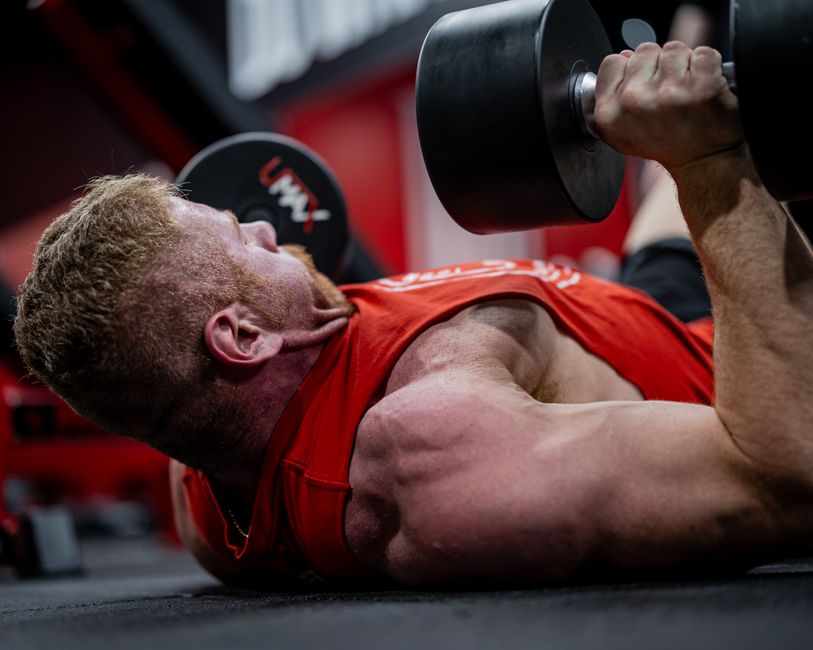
Arm training is where isolation attachments shine hardest. For biceps, you want rotating or semi-supinated handles that let the wrist rotate during the curl — this lets the short and long heads both get loaded. For triceps, you want a combination of rope-style handles (which allow you to spread at the top for the lateral head) and single-handle attachments that let you push through a full extension without elbow strain. Explore the full lineup in our arm workout attachment collection.
Back and Lat Isolation
Back is a compound muscle group, but most people's backs are dominated by one region — usually the upper traps or the lats, depending on how they pull. To bring up a weak mid-back or grow the lats in the stretched position, you need handles that let you pull with a neutral or semi-neutral grip, at varying widths. Strap-based handles and rotating pull attachments do this better than any fixed bar. Browse our dedicated back workout cable attachments.
Chest Isolation
Flyes, crossovers, and squeeze presses isolate the pecs better than any bench press variation, because they eliminate the triceps and front delts almost completely. The catch is that you need attachments that let your hands travel across your body on a natural arc. Rotating handles and single-grip attachments do this. Explore our chest workout attachment collection for crossover and squeeze-press options.
Shoulder and Delt Isolation
Rear delts and side delts are the two hardest muscles to feel for most lifters. The trick is to train them with cable tension at the exact angle where they line up with resistance — usually slightly above shoulder height for side delts, and pulled slightly behind the body for rear delts. Upright row-specific straps, like the Delt Belt handle straps for cable machine upright rows, were built specifically to keep this movement honest.
Core and Anti-Rotation Isolation
The abs, obliques, and deep core respond to resisted rotation, lateral flexion, and anti-rotation holds — none of which a cable machine delivers without the right hardware. Torque-style handles and twist-capable attachments are the answer here. Check out our Physio-Twist core torque handles and the ab workout attachment collection for the tools that actually load the core through rotation instead of just letting you crunch.
Grip and Forearm Isolation
Grip strength is foundational for every pulling lift, and most people ignore it until they fail a deadlift. Cuff-style suspended handles and dedicated grip tools let you train crush, pinch, and support strength safely. See our forearm and grip isolation attachment collection.
How to Choose the Right Muscle Isolation Attachments
Before you buy anything, answer these five questions honestly.
- What machine will you use them on? Not all attachments fit all cable systems. Check the pin diameter and the carabiner. If you're at a commercial gym, most standard 1-inch or 25mm attachment points work. If you're using a functional trainer or home cable station, verify the cable size. Our Cable Crossover Machine Handles: 2026 Buyer's Guide breaks down compatibility in detail.
- What's your lagging muscle? Buy for the muscle that's holding you back, not the muscle you like training. If your rear delts are behind, buy rear delt gear. If your forearms fail first on rows, buy grip gear.
- Fixed or rotating? Rotating handles cost more but offer more angles. Fixed handles are cheaper and fine if you already know your optimal grip. Most lifters get more out of one rotating pair than from three fixed ones.
- Build quality matters more than brand. Welds, stitching, carabiner rating, and material wear all determine whether an attachment lasts a decade or a year. Cheap gear fails under load — sometimes in the middle of a heavy rep. That's an injury waiting to happen, which is why our guide on durable gym equipment that survives the war is worth a read.
- Buy for the long game. Quality isolation attachments last. A good pair of rotating handles or a solid Delt Belt will outlive three cable machines. Treat them as gym gear, not accessories — the same philosophy behind workout accessories for lifters that actually deliver.
Programming Isolation Work That Actually Works
Badly programmed isolation work is the reason most people think it's useless. Here's how to do it right.
- Place isolation work after compounds, not before. Unless you're using it as a pre-activation primer, save targeted work for after your main lift so your CNS and prime movers aren't fried.
- Keep the rep range higher. Isolation exercises shine in the 10–20 rep range, especially for smaller muscle groups where joint load matters. Push close to failure — two reps shy is where stimulus lives.
- Use slower eccentrics. A 3-second lowering phase on cable isolation work maximises time under tension, which is one of the strongest drivers of hypertrophy for small muscle groups.
- Train the muscle, not the movement. If you're doing cable curls and your shoulders are swinging, either the load is too heavy or the attachment doesn't fit your arm. Fix the gear, not your form.
- Hit three angles per muscle. The biceps have two heads, the triceps have three, the delts have three. One attachment and one movement won't hit them all. Rotate grips and positions within the session. For a deeper dive on the triceps side, see our guide to the Tricep Rope Attachment: the 2026 Lifter's Guide.
For broader context on programming and the role of structured resistance training in general health, the CDC physical activity guidelines recommend at least two days per week of muscle-strengthening activity. The NHS exercise guidance echoes this with practical recommendations for building and maintaining strength across the lifespan. And if you want a broader library of movements to pair with your attachments, the ACE Fitness exercise library is a solid free resource.
Building a Serious Isolation Kit
You don't need a wall of gear. You need a kit that covers your weak points. A realistic starting point in 2026 for a serious lifter looks like this:
- One pair of rotating handles for curls, presses, and pulls
- One strap-based grip or cuff attachment for forearms and rear delts
- One twist or torque handle for rotational core work
- One single-hand D or triangle handle for triceps and lat isolation
- One specialised piece for your biggest lagging muscle
That last one is the difference between a well-equipped lifter and someone who's just buying gear. Figure out what's holding you back — grip, rear delts, core rotation, elbow-friendly triceps work — and buy the attachment built for that job. If you're not sure where to start, browse the full cable attachment collection and pick the piece that addresses your weakest link.
Conclusion
Muscle isolation attachments are not accessories. They're the tools that make everything else in your training actually hit the target. In a commercial gym full of ten-year-old attachments nobody maintains, showing up with your own rotation-ready, joint-friendly, purpose-built hardware immediately puts you in a different category as a lifter. That's who LPGmuscle builds for — people who refuse to settle for whatever the last guy left on the cable machine.
Every rep counts. Every attachment counts. Load the right hardware, dial the angle, and let the isolation work finally do what it's supposed to do. When your training takes off, the respect follows. Then arm yourself, load heavy, and train like lame workouts are a crime. Every single rep.
